Choosing an Everyday Frying Pan: Cast Iron, Stainless Steel, or Nonstick
Why material matters
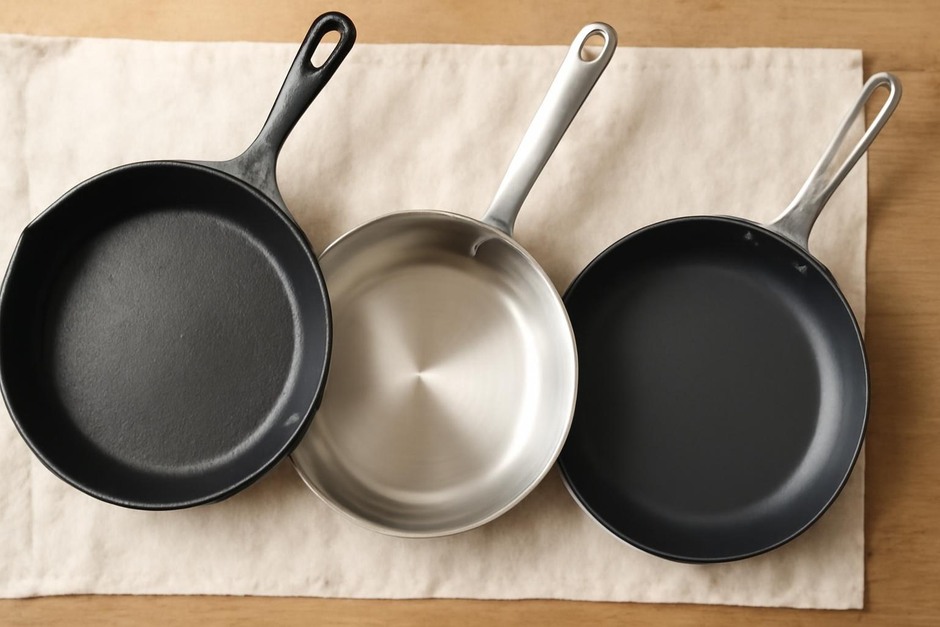
A frying pan is a simple tool, but the material it’s made from changes how it heats, how food behaves in it, and how you care for it. Below are practical comparisons of three common approaches: cast iron, stainless steel, and nonstick. Each has characteristic strengths and trade-offs; the goal is to match those to how you cook and how much care you want to give your cookware.
Cast iron: thermal mass and longevity
Cast iron pans are heavy, thick, and retain heat exceptionally well. They are often seasoned with oil to create a naturally nonstick surface over time.
- Performance: Excellent heat retention and even browning. Once hot, they stay hot—helpful for searing and dishes that benefit from steady heat.
- Care: Requires seasoning and occasional maintenance to keep the surface nonstick. Cleaning usually means rinsing and wiping rather than dishwasher use.
- Durability: Extremely durable; a well-cared-for pan can last decades. It tolerates high heat and metal utensils.
- Trade-offs: Heavy weight, slow to change temperature, reactive to acidic foods if not well-seasoned (can strip seasoning), and takes longer to clean and maintain.
Stainless steel: versatility and responsiveness
Stainless steel pans are lighter than cast iron and often paired with an aluminum or copper core to improve heat conduction. They are a common choice for cooks who want a neutral, durable surface.
- Performance: Good heat responsiveness—heats and cools faster than cast iron. Excellent for browning when preheated properly and for deglazing to make pan sauces.
- Care: Usually dishwasher-safe, though hand washing preserves finish. Food can stick if the pan isn’t preheated or if insufficient fat is used.
- Durability: Very durable and nonreactive to acidic foods. Tolerates high heat and metal utensils without damage.
- Trade-offs: Not inherently nonstick, so delicate foods (like eggs or thin fish) can be tricky without technique. Requires more attention to heat management than nonstick.
Nonstick: ease and lower-fat cooking
Nonstick pans have a coating designed to reduce sticking and simplify cleanup. They are commonly used for low- to medium-heat cooking and for foods that tend to cling to metal surfaces.
- Performance: Outstanding for eggs, pancakes, and other delicate foods. Easy release means less oil or butter is needed.
- Care: Gentle cleaning and nonabrasive utensils are recommended; many are not suitable for the dishwasher if you want to extend their life.
- Durability: The coating degrades over time and with rough treatment. Typical lifespan is shorter than cast iron or stainless steel.
- Trade-offs: Limited tolerance for very high heat and metal utensils. Not ideal for browning that depends on fond (the browned bits that form on stainless or cast iron) because high heat and scraping are discouraged.
Comparing common cooking tasks
- Searing steaks: Cast iron or stainless steel generally give better crusts due to higher usable temperatures and fond development.
- Making omelets: Nonstick is the easiest choice for a clean, low-effort result.
- Pan sauces and deglazing: Stainless steel is the most straightforward because it produces easily scraped fond; cast iron can work but often needs more oil and attention.
- Everyday sautéing: All three can do the job; choose based on how much maintenance you want and whether you need high heat.
How to choose between them
Match the pan to your priorities. Consider these scenarios and recommendations.
- You want one pan that lasts and tolerates abuse: Pick cast iron. It requires more care up front but repays that with decades of service and excellent heat retention.
- You prioritize versatility and making sauces: Choose stainless steel. It performs well across a range of tasks and handles acidic ingredients without issue.
- You want low-effort cooking for delicate foods: Nonstick is the practical option. Keep in mind the coating will wear and should be replaced when performance falls.
- You like high heat but prefer lighter pans: Stainless steel with a clad core is a balanced choice; carbon steel (a close cousin of cast iron) is another option if you want a lighter pan that can be seasoned and brought to high temperatures.
- You plan to keep only one pan: Consider your most frequent meals. If you often cook eggs and quick breakfasts, nonstick may serve you best. If you cook larger, heartier meals and occasionally sear, a single cast iron or heavy-duty stainless pan can suffice.
Final considerations
Also think about size (10–12 inches is a common everyday range), weight tolerance, and whether you want oven compatibility. Whatever you choose, simple habits—preheating appropriately, using suitable utensils, and following care recommendations—will make the pan perform better and last longer. Matching material properties to your typical cooking methods is the most reliable way to get a pan you enjoy reaching for regularly.